Rekindling my inner sparkle

Rekindling my inner sparkle

Some moments change the direction of our lives almost invisibly.

For me, one of those moments happened during my first NIA training in Vienna.

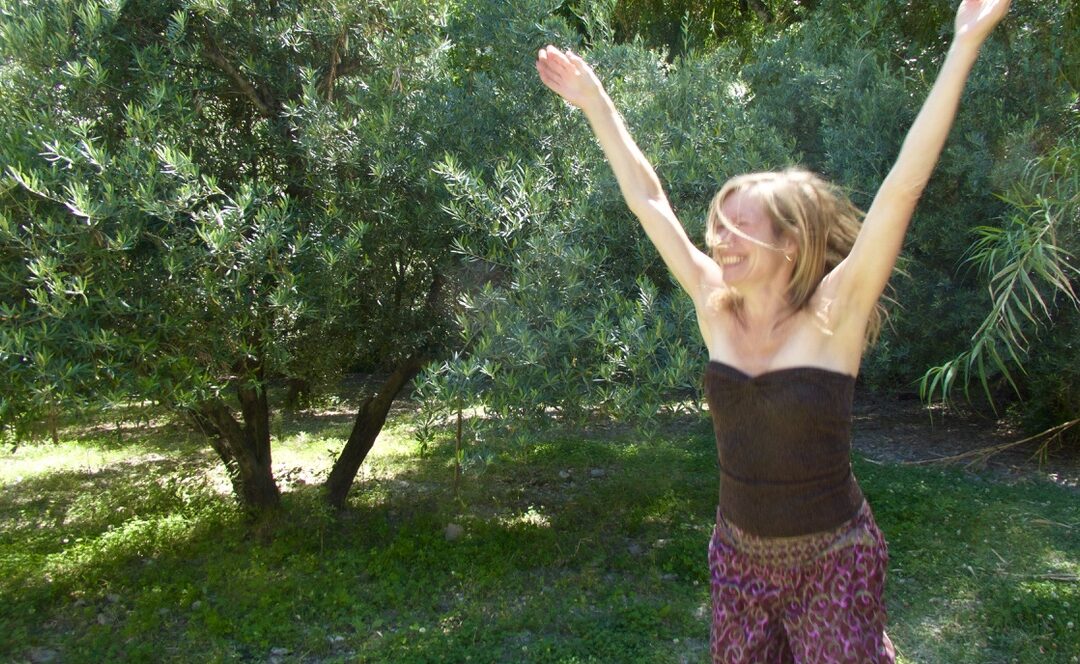
As I danced, something opened inside me. It was as if a light that had been muffled for years began to shine again. I remember feeling spacious, vibrant, and deeply alive.

That week reconnected me with curiosity and wonder. I rediscovered the joy of being me, the freedom of moving without self-consciousness, and with a vitality I hadn’t felt for a long time.

I call these moments Inner Sparkle.

Moments when I feel deeply alive, curious, open, connected, and most myself.

NIA´s movement practice became a way of nurturing the playfulness, creativity, and wonder that had always been part of me, even during the times when I had lost touch with them.

Over the years, my understanding of Inner Sparkle has continued to grow.

Today, I experience Inner Sparkle as one of the most beautiful expressions of our own nature. For me it is the felt sense of vitality, openness, curiosity, love, and aliveness that becomes available as the qualities of our relationships with ourselves, others, and life itself become more nourishing.

That doesn’t mean life suddenly becomes easy.

We still experience loss, disappointment, uncertainty, and challenge.

Yet even in those moments, I believe there is a remarkable living intelligence within us that keeps adapting, learning, and searching for new possibilities.

I’ve come to see that welcoming ourselves home is about gently rediscovering the qualities that were always part of our own nature.

For me, my Inner Sparkle is one of those qualities.

It reminds me that beneath all the ways we learn to protect ourselves, there is still curiosity.

Still wonder.

Still creativity.

Still love.

Still life, waiting to be lived wholeheartedly.

My inner museum

My inner museum

To change our mode of action, we must change the image of ourselves that we carry within us. — Moshe Feldenkrais

In my twenties, I worked part-time as an attendant in the municipal museum in The Hague.

My job was simple: keep an eye on the paintings.

There was a hall dedicated to the work of Piet Mondrian. Painting after painting, the whole wall filled with his geometric world — and then, in the middle of it all, a large canvas called Evolution.

Blue. The most extraordinary blue. Blue in the blue, layer upon layer, that draw me to other places...

I stood in front of it and forgot everything — time, space, my body, the other paintings I was supposed to keep an eye on.

Moments like that made me wonder how attention shapes our lives. What happens when one experience grabs our attention so completely that, for a while, everything else fades into the background?

As we live life, we have many experiences that hurt us, scare us, give us joy, love,… And as we grow, they become the stories of our lives, the paintings in our inner museum.

All of it is there, on the walls of the museum we carry inside us.

And in every museum, there is always one painting that captures the attention more than the others.

Mine was a classroom in the Netherlands: a little girl with buck teeth, spiky hair and a fiery red blush on her cheeks. The teacher making fun of her, the other children jeering at her.
And the girl — I can still see and feel her so clearly, standing in the front of the class — looking at herself from the sidelines as she cringes and slowly disappears.

For a long time, that was the only painting I could see.

I stood very close to it. So close that it filled my entire field of vision. Every thought, every movement, every glance in the mirror passed through the lens of that image — of a girl who was wrong in some fundamental way, who didn't belong, who was better off making herself smaller, invisible and less.

Over time, as this inner painting kept my attention,  I felt more anxious, more tense, and more alone.

The body learns quickly. Mine learned to hold itself in a way that matched the painting: tense, contracted, on guard, eyes that continuously scanned their surroundings for danger. A body telling the world, before any words were spoken, that it was bracing for something.

What happens when one painting fills the whole wall

When attention is drawn to one painting for long enough, the rest of the museum gradually disappears from view.

The other stories — of joy, of capacity, of connection, of the moments when life felt genuinely good — are still there on the walls. They have always been there. The body keeps them all.

And yet a nervous system, organised around a particular storyline, keeps returning to the same painting – in search for ‘the danger’, in search for confirmation of what it already knows. Moving through the world as if that painting were the only thing that existed.

The body moves accordingly. We may brace ourselves, clench our jaws, tense our shoulders, breathe shallowly. Little by little, the whole system becomes organised around the story that has come to occupy so much of our attention.

Zooming out

When attention has been drawn to one difficult painting for a long time, it can be surprisingly nourishing to discover another one that has been hanging there all along.

The more experiences the body has, the less it has to organise itself around a single story.

Dancing and moving with awareness invited my attention to other paintings in my inner museum.

Through experiencing different ways of moving, sensing and holding myself, I gradually discovered different ways of being. I began to discover paintings I hadn't noticed before. Paintings that evoked ease, joy, curiosity, confidence, connection.

My body encountered experiences it had no reason to defend against. And little by little, my attention was no longer drawn to just one story.

As my body gathered more ways of experiencing itself, I began to perceive my whole inner museum.

With that came a greater variety of sensations, emotions, and possibilities. Feeling more of myself allowed me to see myself differently, to perceive the world around me differently and to make different choices—choices that felt more in tune with who I am, what matters to me, and how I wanted to meet life.

The difficult painting is still there. It is now simply one painting among many.

From this new place, something shifted in the way I experienced myself, and with it, the way I held myself and moved through the world.


More about the relationship between body, brain and behaviour

More about the relationship between body, brain and behaviour

How do you attend to yourself and your body?

In the previous two blog posts, I discussed the law of reciprocity, the social principle whereby an action is repaid in kind, and how this also exists internally between our mind and body. And how the body mirrors the way we treat it, how we care for it, and how we think about ourselves through specialized brain cells called mirror neurons.

How you think about yourself and what you tell yourself about your body, your wellbeing, your needs and how you take care of yourself is largely reflected in the way you pay attention to your body's messages, the way you move, eat, rest and the daily structure and routines you create for yourself. How you do anything is how you do everything.

When your body and nervous system often feel not heard in their feedback, your biology responds with a protective reaction, a defence mechanism. It may happen that the increase in intensity exceeds the bandwidth of your nervous system and body to process, resulting in your system becoming stuck in its defense mechanism. It does not feel safe with the incoming information arising from your movements, actions, and efforts. It reacts by shielding itself, closing itself off, contracting, freezing its capacity for moving...

This has a direct effect on how your system subsequently interprets signals from your external environment. Your movements influence the perceptions of your senses and your interaction with your environment. This can be experienced as feelings of tension, heaviness, or through increasing hyper vigilance, shadow breathing and emotions of fear, frustration, anger, sadness, a harsh inner critic chattering, limiting beliefs surfacing, and feelings of fatigue, low energy, and even sadness. Overtime this tension patterns can lead to little capacity to digest life, anxiety, chronic physical tension, immune disorders, tightness, gut stress, and low energy. Not cool! Happily you can help your system un-freeze.

We can help heal our neurobiology from habits of fear and hypervigilance by changing how we move and attend to sensations.

Here is what you need to know...

Your nervous system will only tell your muscles to release their contractions when it feels safe. Less is more here. It's like talking to an animal or a baby. Instead of yelling at a little one, we whisper little messages in a soft, friendly, calm, rhythmic, and gentle tone. Your conscious movements are like that tone of voice. Small, gentle, slow, and smooth movements tell the autonomic nervous system that the body is safe, that it will not be hurt. They tell the nervous system that it is being listened to and that its pace, rhythm, and capacity are being honored. They evoke sensations of pleasure and ease that are sent to the central nervous system, inviting it to give the signal to let go. And when the tension in the body is released, our emotional inner landscape and mental landscapes also change, as does our perception of the outside world.  A softer body and a relaxed nervous system look out into the world with openness, trust, and curiosity instead of hypervigilance, distrust, and fear.

Changing the response of our neurobiology does not happen through forcing ourselves or taking big leaps. It happens in the subtle interaction between intention and action. The moments when we pause and listen to the impulses our system gives us to feel better.

It comes down to moving slowly and attentively, while listening to the feedback from our body. This includes the way you eat and engage in daily action. And as you explore the roadmap of movement choices, you help your nervous system by paying attention to the sensory and emotional signals of pleasure and ease. Because through combining our actions with sensations of pleasure, and ease, we do exactly what our nervous system needs to rewire deep-rooted patterns of tension, vigilance, overwhelm, and fear. That is, we help it to change its attention pattern to sensations of pleasure, ease, and expansion so that it can rebuild trust in spontaneous interactions with its environment. This way you will soon no longer move through life with the brakes on, but can truly enjoy the experience of aliveness. That is what I call rekindling your inner Sparkle.

How about your inner Sparkle?

In the retreats from "Freeze to Flow" and "Pause, Listen, Reconnect with your Body", I guide you to help your system feel safe again and meet life with trust and joy.

The law of reciprocity in self care

The law of reciprocity in self care

What you give to your body is what your body gives back to you.

In both psychology and neuroscience, the law of reciprocity teaches us that our inner attitude and how we behave toward our bodies and ourselves is reflected back to us by our bodies by creating a feedback loop between our behavior and our biological well-being.

If you are often hard on your body, speak harshly to it, neglect its needs, or if you lack understanding of your body´s way and force it beyond its capacity, Your body can respond to this with tension, stiffness, contraction or fatigue, to name but a few sensations.

When this is a recurring pattern, it may even happen that the increase in intensity exceeds the bandwidth of your nervous system and body to digest life. resulting in your system becoming stuck in its defense mechanism. Your body may respond by becoming chronically tense, which can lead to hypervigilant attention habits, a limited ability to process life, anxiety, physical tension, constriction, gut stress, and low energy levels.

Why?

This response of your system has a direct effect on how it interprets signals from your external environment. Your movements are connected to your sensory perception and your interaction with your environment.

We are often unaware that we are acting out of tune with the subtle needs and desires of our biology. Many of us learned from a very young age that it is normal to force ourselves to do more than our body and nervous system can handle. We have learned not to live in harmony with our body and its rhythms by controlling and forcing it. We have learned that our body's reaction to our demands is a fault of our body. We have learned to silence those body's messages through quick fixes and external interventions. This behavior often leads to ways of holding ourselves, moving, expressing, breathing, or eating that are not in alignment with the nature and needs of our bodies.

And that is where the law of reciprocity can teach us to make a different move.  The law says that when you use effort, friction, and force to make your body do something against its will, your biology and nervous system respond with equal friction, tension, contraction, and an increasing intensity of negative sensations, emotions, images, and thought streams. On the other hand, when you follow your body's way and attune to its needs, your body and nervous system respond with a corresponding expansion, pleasant sensations and emotions, growth, ease, and fluidity.

And the needs of your body and nervous system are very down-to-earth. They need ongoing sensory contact with the outside world, and a reciprocal relationship with gravity. They need to follow their natural pace and rhythm. They need energy-efficient ways to go through life, which translates into sufficient rest, calm eating and digestion, and efficient, effortless movements, guided by feelings of ease, pleasure, and flow.

Would you like to bring more ease, pleasure, and flow back into your body and life?

All my neuro-somatic retreats are designed to help you reconnect with the needs and desires of your system and experience a lasting sense of wholeness and well-being.

Play, play and play

Play, play and play

We find much of our ease and pleasure in play. You only have to look at small children and see how they get fully absorbed in playing, and then how they enjoy themselves. Indeed, playing helps us to be completely in the present moment, and to feel carefree and joyful for a while. When we play, our attention is not so focused on our more intense inner world.

For us adults, it would be healthy if we spent more time in our playful infant mind space, where curiosity, awe and wonder dance together. Play awakens our creativity and inventiveness. It creates space in our minds.

So why not play more? Everything in our daily lives can be ‘play’ by approaching it with a playful attitude. Our brains love it. It is a powerful nutrient for a resilient nervous system. And it gives space and relaxation in the body. Let's talk about play...

Renew your self-image to match who you really are?

Renew your self-image to match who you really are?

Very early on, our brains create an image of ourselves that has its roots in our earliest life experiences. Our brain uses this self-image as a kind of roadmap to predict who we should be and how we should be in relationship to our environment, and others. This self-image directs how we move, talk, think, feel, and perceive ourselves in the world. It drives our behavior and relationships, and it shapes our model of the world.

As toddlers, we learned by trial and error what was safe to feel and express in order to receive love from our caregivers. We learned to suppress certain sensations and copy certain behaviors for fear of rejection. In other words, we learn early on who, how, and what we need to be to belong and be safe.

A self-image is a complex composition of image, movement, emotion, sensation, and perception. Depending on how it sees us in the world, it forms attentional habits that then act as a filter, a kind of glasses, distorting all our perceptions, images, emotions, thoughts, and sensations. And all those perceptions, emotions, thoughts, and sensations inform our neuro-biology about what the world inside and around us is like.

So you could say that our self-image colors our inner experience and our perception of the outside world. If this keeps repeating itself, it creates patterns in our neurobiology that in turn affect our lives, relationships, and well-being.

Suppose you have a negative self-image...This can become an endlessly repeating circle that culminates in hypervigilant attention habits that revolve around what is wrong and constantly reinforce our negative experiences. Resulting in our neuro-biology running survival programs that deplete our body systems of energy. We might not feel very well in our skin all-together which in turn reinforces our negative self-image. An endless circle…

How can you create a new self-image that matches who you really are in the heart of your being?

Our body tells our story. It's like a history book. The way she stands, sits, moves, dances, and expresses inner movement. They are all expressions of how we are in the world and how we are in relationship with ourselves, and others. They also reveal how our nervous system has organized itself based on our self-image.

Our body also knows the way out of a negative self-image. That is out of neurobiological survival patterns rooted in negative attention habits. If we only dare to trust her and entrust us to her guidance, she will show us how to write a new story. A new story through the physical senses and how she receives the environment through them.

When we put our minds in the passenger seat and enjoy the ride of the eyes, ears, nose, tongue, and skin, we experience the world as it is. A world that is not necessarily about us. It's neutral and it helps our brains map themselves into the here and now that isn't colored by the attentional habits of our self-image. It gives our brain an accurate world map of the moment.

Our brain has the task of mapping out a route to the next moment that is as energy-saving, enjoyable, and pleasant as possible. This means that the brain makes a prediction and a strategy to face the future, the next moment. Our biology and body systems then use this information to do their magic. You can imagine that the uncolored objective reality of our senses provides a better roadmap for that route than the colored subjective negative world map created by the self-image.

And in time with the real-time roadmap of the senses and the updated strategies of our brain, our genius system starts to form a new self-image that is rooted in the here-and-now story of how we belong and are embedded in the greater web of life.

And then the circle starts again. Attention habits form that inform our biology which in turn informs us through how we move, feel, sense, give meaning, dream, and envision. Only this time the attention habits tell us about what is, and reflect our nature back to us by what we receive from the present world around us. And those will be messages of beauty, goodness, kindness, and ease that recalibrate our inner compass to our inner sparkle, to genuine well-being, and authenticity

And to have again an inner compass that guides us to our inner sparkle, to our north star, to the essence of who we are... That is what I wish for us all.