Rekindling my inner sparkle

Rekindling my inner sparkle

Some moments change the direction of our lives almost invisibly.

For me, one of those moments happened during my first NIA training in Vienna.

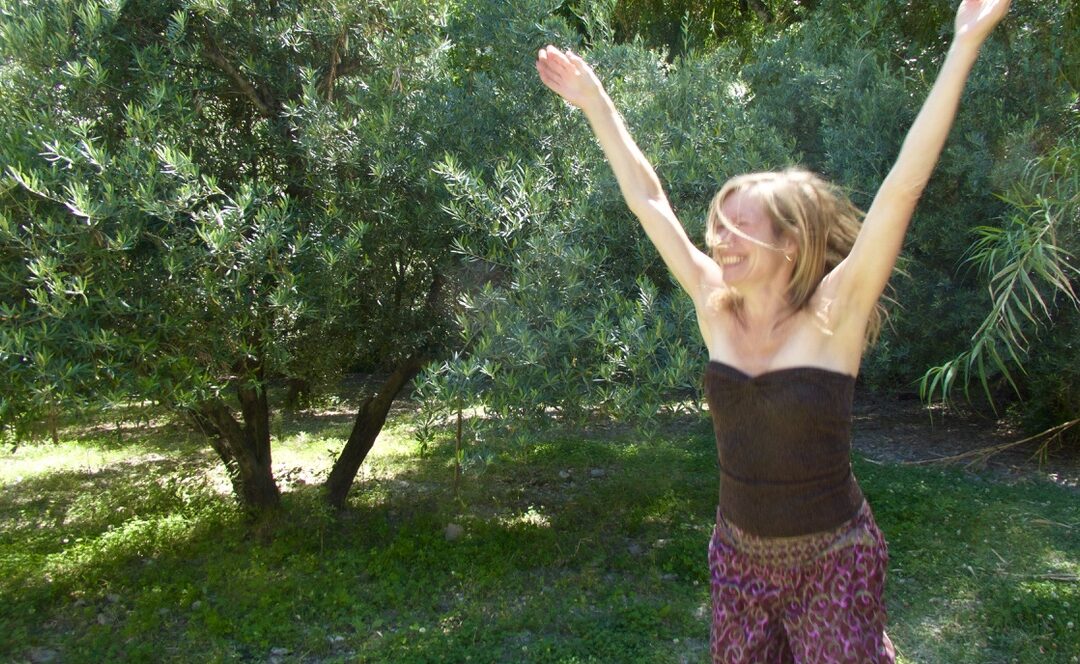
As I danced, something opened inside me. It was as if a light that had been muffled for years began to shine again. I remember feeling spacious, vibrant, and deeply alive.

That week reconnected me with curiosity and wonder. I rediscovered the joy of being me, the freedom of moving without self-consciousness, and with a vitality I hadn’t felt for a long time.

I call these moments Inner Sparkle.

Moments when I feel deeply alive, curious, open, connected, and most myself.

NIA´s movement practice became a way of nurturing the playfulness, creativity, and wonder that had always been part of me, even during the times when I had lost touch with them.

Over the years, my understanding of Inner Sparkle has continued to grow.

Today, I experience Inner Sparkle as one of the most beautiful expressions of our own nature. For me it is the felt sense of vitality, openness, curiosity, love, and aliveness that becomes available as the qualities of our relationships with ourselves, others, and life itself become more nourishing.

That doesn’t mean life suddenly becomes easy.

We still experience loss, disappointment, uncertainty, and challenge.

Yet even in those moments, I believe there is a remarkable living intelligence within us that keeps adapting, learning, and searching for new possibilities.

I’ve come to see that welcoming ourselves home is about gently rediscovering the qualities that were always part of our own nature.

For me, my Inner Sparkle is one of those qualities.

It reminds me that beneath all the ways we learn to protect ourselves, there is still curiosity.

Still wonder.

Still creativity.

Still love.

Still life, waiting to be lived wholeheartedly.

My inner museum

My inner museum

To change our mode of action, we must change the image of ourselves that we carry within us. — Moshe Feldenkrais

In my twenties, I worked part-time as an attendant in the municipal museum in The Hague.

My job was simple: keep an eye on the paintings.

There was a hall dedicated to the work of Piet Mondrian. Painting after painting, the whole wall filled with his geometric world — and then, in the middle of it all, a large canvas called Evolution.

Blue. The most extraordinary blue. Blue in the blue, layer upon layer, that draw me to other places...

I stood in front of it and forgot everything — time, space, my body, the other paintings I was supposed to keep an eye on.

Moments like that made me wonder how attention shapes our lives. What happens when one experience grabs our attention so completely that, for a while, everything else fades into the background?

As we live life, we have many experiences that hurt us, scare us, give us joy, love,… And as we grow, they become the stories of our lives, the paintings in our inner museum.

All of it is there, on the walls of the museum we carry inside us.

And in every museum, there is always one painting that captures the attention more than the others.

Mine was a classroom in the Netherlands: a little girl with buck teeth, spiky hair and a fiery red blush on her cheeks. The teacher making fun of her, the other children jeering at her.
And the girl — I can still see and feel her so clearly, standing in the front of the class — looking at herself from the sidelines as she cringes and slowly disappears.

For a long time, that was the only painting I could see.

I stood very close to it. So close that it filled my entire field of vision. Every thought, every movement, every glance in the mirror passed through the lens of that image — of a girl who was wrong in some fundamental way, who didn’t belong.

Over time, as my attention kept returning to this inner painting, I felt more anxious, more tense, and more alone.

The body learns quickly. Mine learned to hold itself in a way that matched the painting: braced, contracted, and on guard.

When we stand very close to one painting for long enough, it can begin to feel as though it is the only one in the museum.
Yet the others are still there—paintings of joy, capacity, connection, and moments when life felt genuinely good. The body keeps them all.

A nervous system organised around a particular storyline keeps returning to the same painting, searching for threat and confirmation of what it already knows. Little by little, the whole system begins to organise around that story, until we experience our inner museum as if that painting were the whole museum.

We may feel it in the way our body braces, our jaws clench, our shoulders tense, or our breath becomes more shallow.

When attention has been drawn to one difficult painting for a long time, it can be surprisingly nourishing to discover another one that has been hanging there all along.
Experiences of movement rooted in ease, curiosity, and simple pleasure gently widened my attention. As I explored different ways of moving, sensing, and holding myself, my body gradually softened. My attention naturally turned towards paintings I hadn’t really seen before—paintings that evoked ease, joy, curiosity, confidence, and connection.

My body encountered experiences it had no reason to defend against. Little by little, my attention was no longer drawn to just one story. I gradually began to perceive my whole inner museum.

The difficult painting is still there. From where I now stand, it is simply one painting among many.

From this new place, something shifted in the way I experienced myself, and with it, the way I held myself and moved through the world.

The power of your self-image

The power of your self-image

How do you feel? And how do you want to feel?

These are the most important questions for me when guiding someone. These questions led me to how a person experiences herself or her body and has created an image of herself. And for many women, that self-image is anything but positive, with all the misery that entails.

Our self-image is like a filter of thoughts, beliefs, and feelings through which we see ourselves, our bodies, our actions, and our environment. It has a huge impact on how we move through our lives, and what decisions we make for ourselves. It creates our signature as well as our habits.

Our self-image manifests itself in the body through the way we hold ourselves and the way we move. The more negative our self-image, the more postures we adopt that can really hurt us physically. Our self-image also reflects in the health of our body and in our outer appearance. Do you sparkle? Do you open your heart to the world or close yourself off? Do you feel heavy, rigid, or light, expansive? Our self-image guides us through life, for better and for worse.

I experienced first-hand how my self-image steered my life.
My self-image told me early on that it was not safe to be me, that I was not loved, not good enough and not worth being seen. That I should be ashamed of who I was and that I would never belong. And my way of coping with this image was by trying to be perfect in all sorts of ways and by doing that, I was actually creating more of a harmful self-image and its associated harmful habits. Do you recognise that your self-image makes you feel smaller and more scared than you actually are?

Our nervous system is very vulnerable in the early years of our lives. It absorbs energy from our caregivers and our environment. However, the brain is not yet sufficiently developed by then to understand and give words to all these stimuli. Until our 5th year of life, all life experiences, positive and negative, are experienced with the same intensity. Our nervous system at this stage explains all signals into pain or pleasure. As little ones, we are completely dependent on the love and attention of our caregivers to survive, so we will do anything to get it.

During this period, we often create the painful pieces of our self-image and all the emotional habits that stem from it. This limits us in our later life to step into our light. Our self-image has the power to hinder our nervous system from creating opportunities that put us in our power with regard to our health, our feelings, our thoughts and the way we move and act.

I know you need to change your self-image to get your sparkle back. And that this requires small actions. One step at a time. How wonderful that you can easily achieve this by starting through your body and at the level of action: namely, moving.

Movement is the language of the central nervous system.
That part of our nervous system that organises and coordinates our thoughts, feelings, actions, and movement. It receives all input through movements that take place inside and outside the body and that we experience through sensations, for example. Think of the movement of breathing, cell activity, the organs, the skin, the blood flowing through the veins, the beating of our heart, the life energy that flows through us and expresses itself through emotions, among other things, and so on.

With this information, our nervous system organises all the activities in our body. Not only our physical movement, but also our thinking, feeling, and acting. It has the ability to create endless new connections and opportunities to dance with life. And this is why, through the body and with movement, I can create lasting change for the women I coach.

May I dance you home?


Rooting in yourself

Rooting in yourself

In my retreats at Jardin de Luz, I often include one or more Chakradance sessions.

While dancing through the base chakra myself, I came upon the themes of belonging and birthright. I know that there are many people who struggle with a deep feeling and belief of not being welcome, not being wanted, or feeling that they have no right to be there, to exist. There often is a fear of feeling the intense emotions that these deep experiences and beliefs bring into the body.

I struggled with it myself. And it caused me to feel deeply insecure and anxious about who I was. I worked hard to feel accepted by others, and to avoid pain. I used to have a strong inner voice constantly alerting me to possible signs that no one was waiting for me, and that I was not wanted. I was hyper-vigilant and sensitive. I was constantly aware of my surroundings, other people's emotions, the energy around me, and another person's slightest (inner) movement. At the slightest thing, I shot out of my body like you might jump up from a chair startled when stung by a wasp.

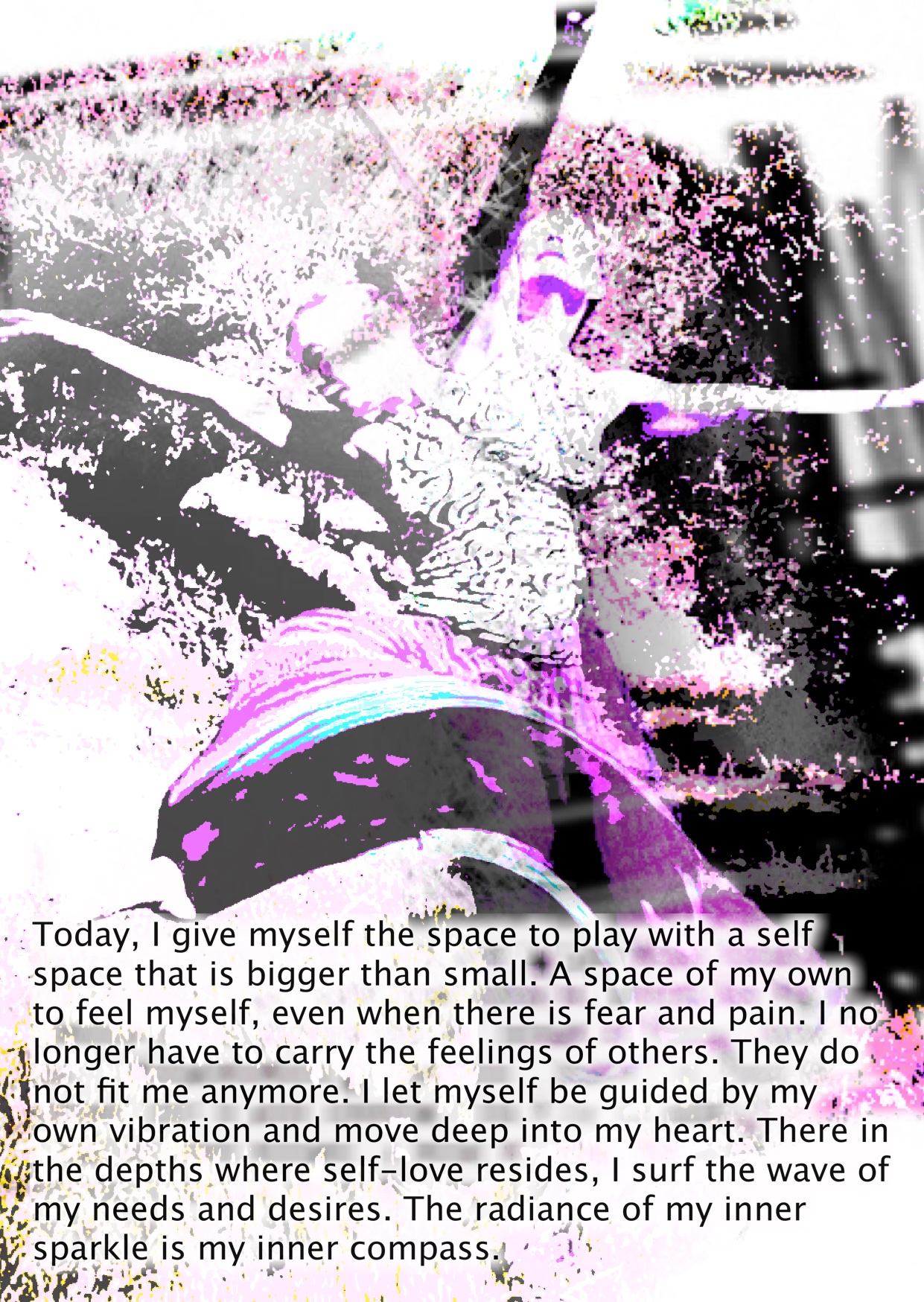
Thankfully, this lonely, fearful time has long passed. I have found a warm home within myself, within my body. Six months after I moved to Spain and a few months after I completed the Chakradance facilitator training, I wrote a few lines about it that you can read below.

For me, connecting and working with the archetypal energies that flow through my body and circulate in my energy field helped me find peace within myself and grounding in my body. From this safe base in my body, I can feel myself, be myself in new encounters and relationships. And in challenging moments, I now also feel the inner support and safety of my body.

Why can it be so powerful to work with archetypes creatively as we do in Chakradance?

Archetypes are the basis of all the underlying, unlearned, instinctual patterns in our behavior. They exist in our human collective consciousness and are embedded in our psyche from which they influence how we move through life and perceive, feel, think, and act.

Dance is like a mirror in which we see the archetypal energies at work in our energy system. We can clearly feel where they bring imbalance and distortion to our energetic make-up. It offers us a conscious way to connect with these archetypal energies and change how and where they affect us.

In this way, deep instinctual patterns in our behavior get a chance to transform. This changes not only our perceptions for the better, but also how we feel, think, and move in relation to others and our environment.

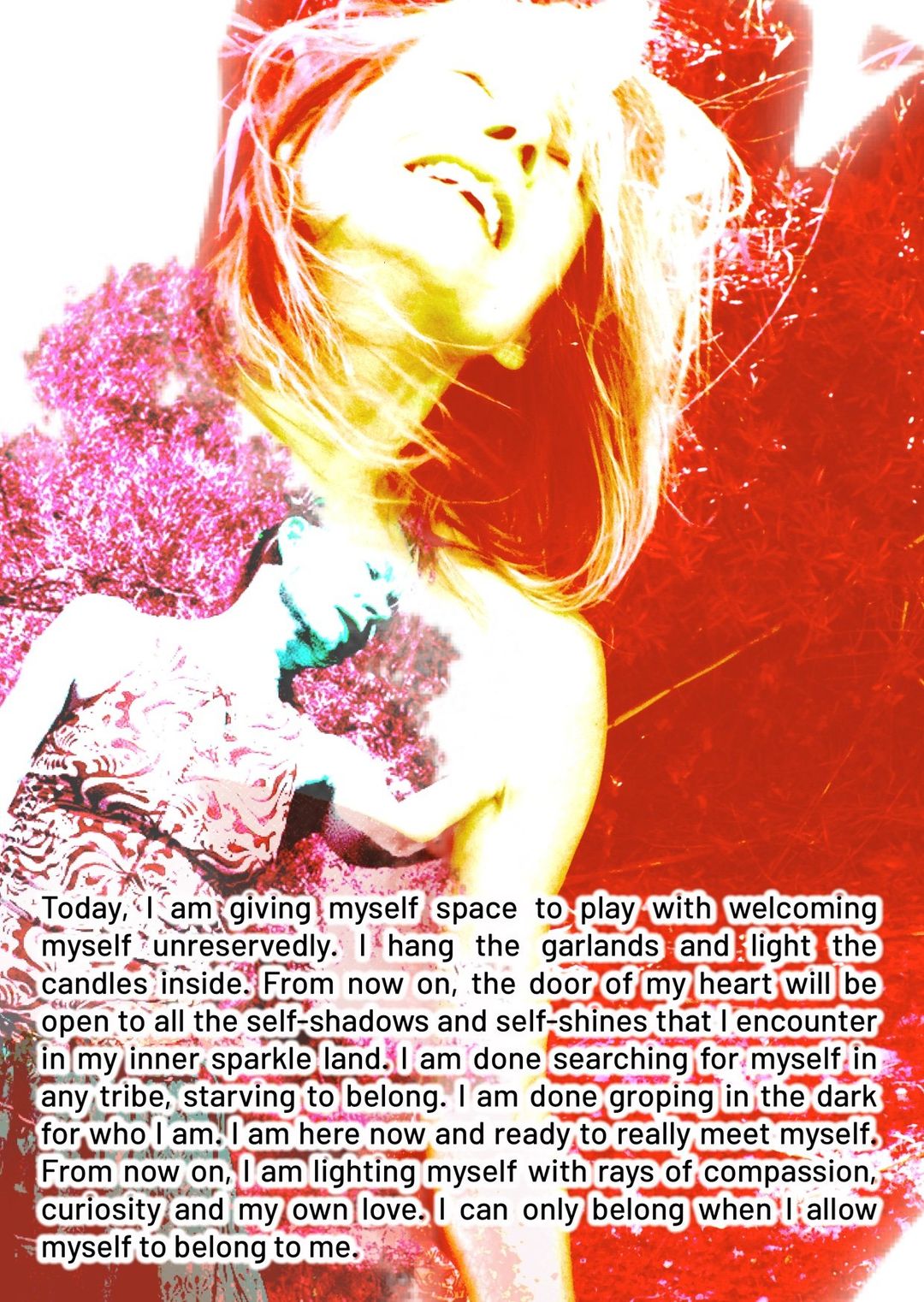
"I can only belong when I allow myself to belong to me"

Dancing with your base chakra 'Muladhara', helps you dissolve deep beliefs of not fitting in, of being alienated from your body, and feelings of fear, overwhelm, and insecurity. In fact, even longstanding patterns of physical tension and e.g. back pain can be released when the energy of the base chakra is better balanced. It also changes the vibration in your energy field and therefore the way other people perceive you.

The way you move tells your personal myth

The way you move tells your personal myth

What is your story?
And is it still the story you want to tell yourself?

The way you move tells your personal myth and shows you the hidden parts of yourself. It reveals to you the deepest beliefs and feelings that underlie the story you have come to tell yourself about yourself and the world around you.

Your way of moving tells you f.e. about the unconscious thoughts that dominate your self-image from the background. You can read your deep basic beliefs and unconscious habits, and also how you are in relation with your body and the world around you.

The way you stand, sit, move, reach out and turn inwards tell about (unconscious) emotional patterns. These often originate long ago and impose themselves in the way you carry yourself; your personal conditioned patterns of muscle-contraction as well as the way you talk to yourself and about yourself.

Meet yourself in movement

Over the years, I learned about the many unconscious stories I was telling myself by landing more in my body and becoming aware of how I was moving and how that made me feel.

I now recognize the stories that are well hidden in the depths trying to keep their grip. They used to control me with subtle posturing patterns that kept me small. Now I am aware of their ways and can choose whether and how to respond to them.

Your body tells your inner story

Most of these subconscious stories, that live on quietly in the background, reveal themselves in a moment of challenge. Often through a sudden sensation, or an abrupt change in your inner energy flow, that gesture you always make, or that small but all too familiar movement. And even more often through that subtle familiar but unconscious body posture that you have become accustomed to over the years. They are those hidden stories that were written when we were very small and sometimes even long before that. And sometimes the stories live on through us, but belong to family or ancestors.

How do your stories reveal themselves? 

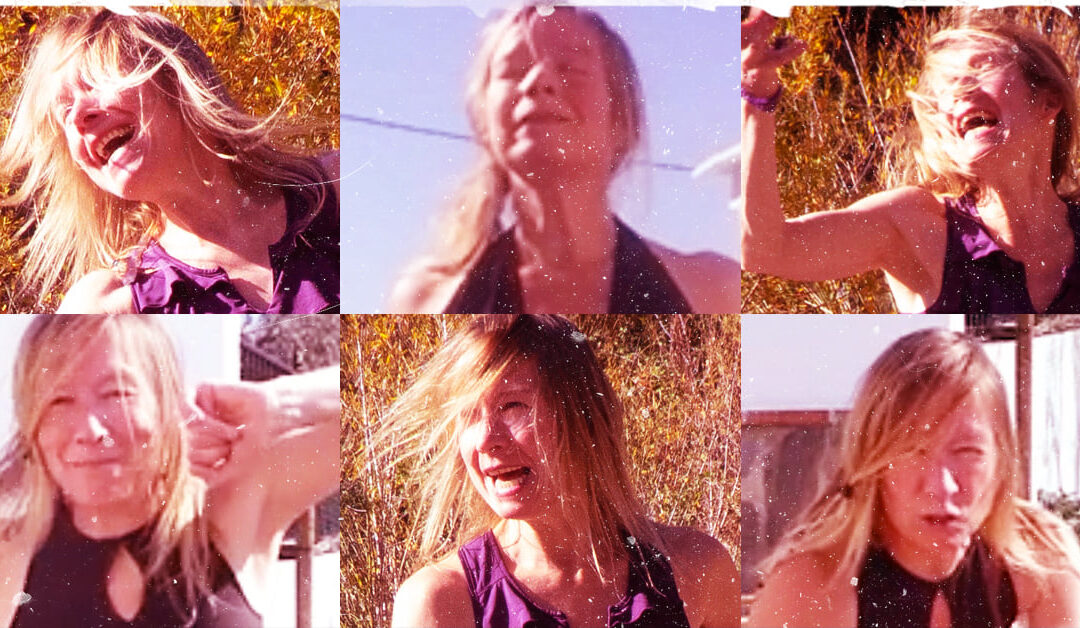
Over the years, my practice of Feldenkrais and NIA has transformed me into a curious movement and sensation detective. Dance is my tool to unravel the inner stories that move, challenge, and touch me. I like to use the movements for my Body Wise guide cards and write a little message to my soul on them.

The sound of you

The sound of you

Sound is our channel for expression. It is the energy of vibration and has the potential to heal and open the spaces in ourselves energetically and physically. It eases our breathing, and softens tight places in the chest and back. Therefore sound is an important element of the sixth chakra; the throat chakra.

When we are at ease with our voice and sound and we speak with clarity and confidence, the energy of this chakra can flow optimally. This keeps our throat, mouth, thyroid, neck, ears, cavities of belly, face, and chest in good health.

We heal and balance our throat chakra when we speak our truth, communicate kindly and non violently yet with clarity. When we are able to listen attentively and receive through our listening. And last but not least when we speak kindly and compassionate to and about ourselves. A balanced throat chakra is a must for our spontaneous expressive energy to flow freely and nourish us with joyous vibrancy and meaningful connections with others.

For as long as I remember, I have been shy and anxious to speak out loud, speak my truth, show myself through my voice.   I would hide in myself as soon as the fire reached my cheeks in a turbulent red. Ever so now and then I still feel panic and blockage when it comes to finding words and sharing my thoughts and feelings through them.

Old wounds as so to speak. It took me some time to realize that blocking my voice caused the tightness I sensed in my chest and upper belly and my shallow breathing and states of anxiety and emotional tension. It even touched upon my digestive system. My journey to get to know my voice and free her started during the Feldenkrais training I took and led me to dance, sing and lament, to NLP, and voice and breathwork.

Fast forward, I now go live on Facebook in a language that is not even my mother tongue. I voice my thoughts and ideas. Daily I get to listen to my voice and the words I choose when I offer Feldenkrais somatic movement play, and Somatic movement creativity online. I celebrate this new step with joy, more confidence, more breath, and resonant spaces in my chest, belly, and bones. And certainly more courage to authentically dance play myself into the light and help other people to step into theirs.

In 2021 I offered a miniseries to free the body's sound system in my former FB group. People told me how much they had enjoyed exploring their body's sound system, expanding their potential for more ease, range, and freedom in expressing and breathing, and to give a voice to their trapped emotions and the beliefs they were holding about their voice and self-image. And how they felt more of themselves.

Do you want to embrace more of you? I now offer the free mini-series 'The Sound of You' on my YouTube channel