
Small Signs of Inner Sparkle

Small Signs of Inner Sparkle

A reflection on living systems, supportive conditions, and the small signs of aliveness that exist alongside protection.

A few weeks ago, I transplanted a tree in my garden.

It had become overshadowed by other trees, receiving too little light and not enough space to grow.
So I thought it might thrive more fully elsewhere.
More space. More sun. More room to grow.

It felt like a good decision. A caring one.
An act of making life better.

I moved it at a time that was not ideal for replanting.
The conditions were already quite warm, and the roots would need to adjust to the change of place.

After the move, the tree changed.

It lost its leaves.
It looked dry. Dull. Sad.

There was a moment where I thought:
Maybe my timing did not land well.

And I could feel that in how the tree responded.

I adjusted my care.
I kept an eye on it.

Enough water. Not too much, not too little.
Protection from too much sun.
Trust.
Patience.

I talked to it when I passed by, telling it how much I appreciated it, how happy I was that it was part of my garden, how beautiful it is, and how much I hoped it would thrive in its new place.

Slowly, something began to shift.

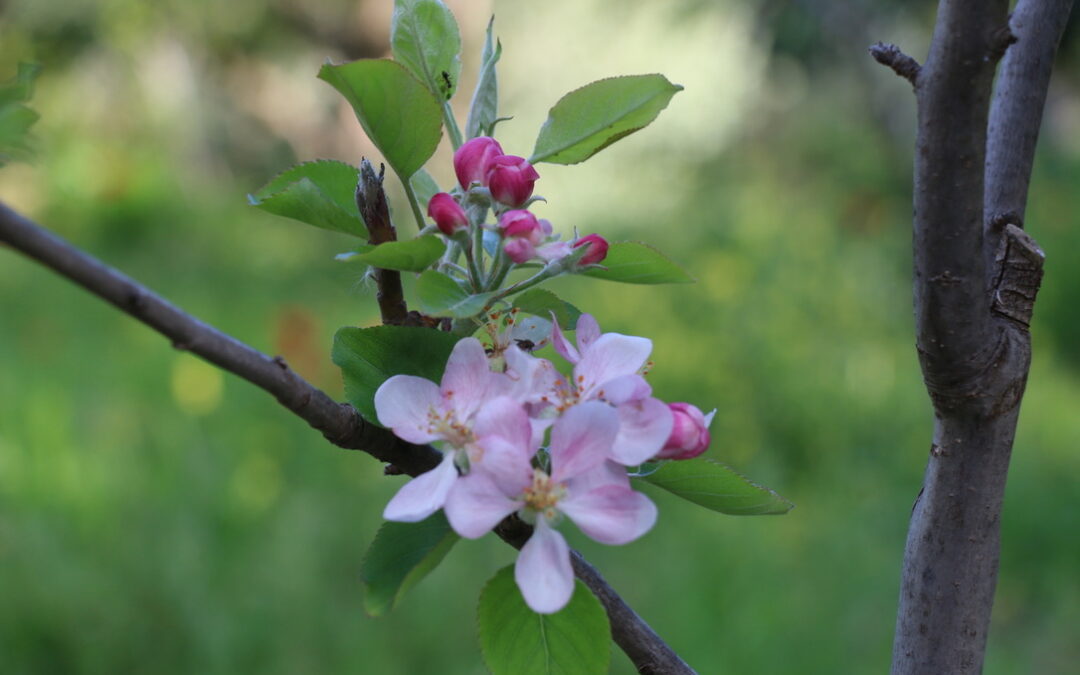
Almost unnoticed, a small green sign of life appeared.

Little green shoots started to spring from the trunk.
The tree was finding its way again in this new place.

The body as a living system

I often think about this when I work with people.

The body, a living system like a tree.

Sensitive to light, space, timing, and environment.
Continuously responding to what is present.

When life has been intense, unpredictable, or overwhelming, the body adapts in ways that make sense in the conditions it is in.

It holds.
It braces.
It narrows.
It conserves energy.
It prioritises protection.

This is how a living system responds when it meets more than it can easily process in the moment.

Over time, this can shape how life feels.

Thinking takes more effort.
Choices take more time.
Creativity becomes less accessible.
Being with others takes more effort.
Even simple things can feel heavy.

Because so much energy is being used to stay organised around protection.

And yet, alongside the holding, there are often small signs of something else.

Aliveness.

Vitality.

Inner Sparkle.

This is something I keep learning from tending my land.

Life responds to conditions in a living, responsive way, continuously relating to what is present.

What I have come to trust

The body changes through the way we attend to the conditions available.

Through attention.
Through movement.
Through orientation.
Through sensory relationship with the world around you.
Through opening to life as it is now.

When the body begins to experience more ease, something shifts.

The system reorganises.

inner intensity softens
perception shifts
attention widens
breath deepens

And from there, more becomes available.

More clarity.
More space.
More energy.
More lightness, aliveness, and peace inside.
More of you.
More of your Inner Sparkle.

The intelligence behind small signs

Like with the tree, nothing changes all at once.

There are seasons.
There are moments of stillness.
There is adjustment.
There is reorientation.

And then small signs...

A little more vitality.
A moment of ease.
A movement that feels lighter.
A thought that arrives more clearly.
A sense of being more present in your life.

The green shoots becoming visible.

Rekindling your Inner Sparkle

This is where my work begins.
I look to strengthen the supportive conditions.

Enough light.
Enough space.
Enough movement.
Enough rest.

Alongside the holding, there are often small signs of something else.

A spark of curiosity.
A moment of ease.
A little more energy.
A desire to create, connect, move, or express.

Like the small green shoot on the tree, they are signs that the system is already exploring new possibilities.

Coming back to your Inner Sparkle is about noticing and supporting these small signs of aliveness alongside the holding.
Rekindling my inner sparkle

Rekindling my inner sparkle

Some moments change the direction of our lives almost invisibly.

For me, one of those moments happened during my first NIA training in Vienna.

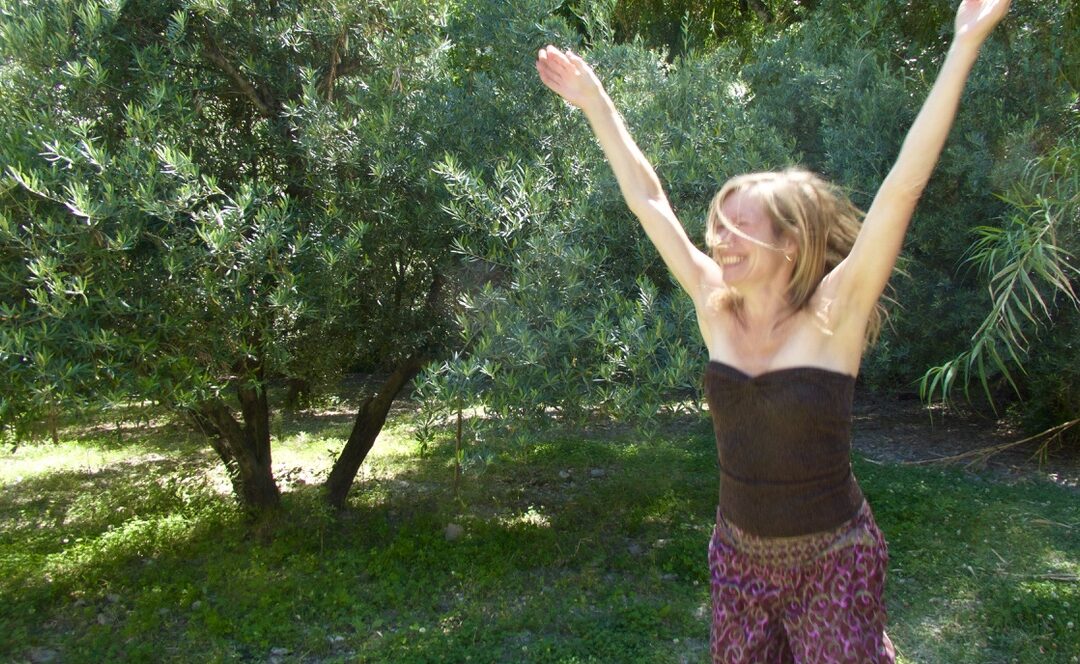
As I danced, something opened inside me. It was as if a light that had been muffled for years began to shine again. I remember feeling spacious, vibrant, and deeply alive.

That week reconnected me with curiosity and wonder. I rediscovered the joy of being me, the freedom of moving without self-consciousness, and with a vitality I hadn’t felt for a long time.

I call these moments Inner Sparkle.

Moments when I feel deeply alive, curious, open, connected, and most myself.

NIA´s movement practice became a way of nurturing the playfulness, creativity, and wonder that had always been part of me, even during the times when I had lost touch with them.

Over the years, my understanding of Inner Sparkle has continued to grow.

Today, I experience Inner Sparkle as one of the most beautiful expressions of our own nature. For me it is the felt sense of vitality, openness, curiosity, love, and aliveness that becomes available as the qualities of our relationships with ourselves, others, and life itself become more nourishing.

That doesn’t mean life suddenly becomes easy.

We still experience loss, disappointment, uncertainty, and challenge.

Yet even in those moments, I believe there is a remarkable living intelligence within us that keeps adapting, learning, and searching for new possibilities.

I’ve come to see that welcoming ourselves home is about gently rediscovering the qualities that were always part of our own nature.

For me, my Inner Sparkle is one of those qualities.

It reminds me that beneath all the ways we learn to protect ourselves, there is still curiosity.

Still wonder.

Still creativity.

Still love.

Still life, waiting to be lived wholeheartedly.

Muscle, Movement & Menopause: A Living Conversation

Muscle, Movement & Menopause: A Living Conversation

During menopause, as estrogen and progesterone decline, the body begins to change both hormonally and also in how strength, tone, and responsiveness are experienced. Strength may feel less present, and the body may ask for more rest between activities, sometimes needing shorter periods of activation.

Your muscles and your sense of responsiveness

We all carry two main muscle fibre types—slow-twitch and fast-twitch. Slow fibres support endurance and steady effort, while fast-twitch fibres are responsible for quick response, power, and reflex. During menopause, as hormonal regulation shifts, these fast-twitch fibres often become less readily available. These are the fibres that help you catch yourself, respond with ease, and feel agile and alive in your body.

Estrogen and progesterone also play supportive roles in the background of muscle health. Estrogen helps the body repair and recover after effort, while progesterone supports the body’s ability to soften and release tension by lowering muscle tone. As hormonal levels shift, recovery can take more time, and tension may linger more easily in the system.

Why you may feel your energy differently now

There is another layer underneath this: the small energy systems inside your cells, called your mitochondria. Muscle tissue holds many of them. When muscle mass decreases, there is also a reduction in overall energy availability. This can be felt as less stamina, less ease in sustained effort, or a system that depletes more quickly.

Muscles are part of a lively conversation between internal movement, organs, energy systems, the nervous system, and emotions. When muscles are functioning well and in balance, there is a greater sense of vitality, clarity, and inner steadiness. When they decline, the whole system feels it as reduced ease, capacity, and safety.

This shift in muscular capacity also influences how the nervous system organizes safety, regulation, and response.

When the body feels less strong or responsive, the nervous system can shift into a more protective mode. Through the HPA axis—the body’s stress regulation system—stress hormones such as cortisol may rise more easily, and the system can become more alert, sensitive, or on edge. Without the same hormonal cushioning and with less felt capacity to recover, the body may interpret everyday demands as requiring more effort than before

You may feel less trust in yourself and doubt yourself more. What was present can get amplified when the system is under strain. The inner critic may roar more strongly: you are not enough. You may feel more easily overwhelmed, or less able to meet what life asks of you.

In this way, your psyche follows the messages of the body: as internal capacity shifts, so does your sense of self and your perception of the world.

This can also shape how life is met. When internal capacity feels reduced, engagement with the world becomes less spontaneous—more careful, more effortful, less fluid. The system naturally prioritizes protection over openness, as if it is saying: I need more support to stay safe and steady.

Meeting your system where it is

As you begin to meet your system where it is, through your attention, movement choices, and how you are with your body, capacity can be restored.

As strength, coordination, and vitality improve, the nervous system begins to shift to: I can respond. I can be flexible. I can embrace life as it comes.

Movement that supports your system in different ways helps restore capacity. To meet life with resilience and vitality, the body and nervous system need movement variation. This allows them to reorganise, adapt, maintain muscle mass and healthy flow. This becomes especially important during menopause.

How my movement practices fit into this conversation

In my retreats, movement plays an important role in meeting your body, your nervous system, and opening to the many facets of who you are. Movement here is guiding, nourishing, and explorative across all layers of your being.

NIA Move to Heal naturally supports embodied vitality. It offers a variety of movement that nourishes strength, agility, flexibility, mobility, and coordination, while also supporting nervous system responsiveness and emotional regulation. It includes short, well-dosed bursts of strength and resistance, supporting the faster, more responsive muscle fibres that benefit from clear, focused activation.

The Feldenkrais Method refines how movement is organized through the nervous system. It improves coordination between muscles, so that unnecessary effort is reduced and movement becomes smoother, more integrated, and less effortful.

Together, these practices help restore communication between the nervous system, muscles, skeleton, senses, and emotions. Energy is used more efficiently, and movement becomes more fluid, responsive, and attuned to what your system needs in each moment.

Movement becomes a way of coming back into relationship with yourself and life, moment by moment. In this ongoing conversation, there is more listening, responsiveness, and room to simply be in your body with trust and ease and experience a more lived vitality.

Your Biology Speaks: Are You Listening?

Your Biology Speaks: Are You Listening?

Your body is always communicating through sensation, emotion, energy, and perception. It is constantly giving you information about safety, capacity, and overwhelm within your system.

During menopause, this communication becomes harder to ignore. As ovarian hormone production begins to shift, the body enters a phase of deep physiological adaptation. The nervous system, stress regulation, and hormonal rhythms all begin to reorganize around a new internal baseline.

This change engages the whole system. Your biology is constantly adjusting how it maintains balance, energy, and resilience in response to both internal shifts and external demands.

When life is already shaped by ongoing stress, pressure, and without enough time for the system to really rest, restore, and reset, this transition can feel more intense. The system has less room to adapt and therefore becomes more sensitive, signalling overwhelm, fatigue, or activation more quickly.

Hormones & Stress Regulation

Estrogen and progesterone are not only reproductive hormones. They also play an important role in regulating the body´s  stress system. They support hormonal regulation of the central stress-response system (HPA axis), helping to soften the body’s response to stress and support recovery afterwards, creating more room for regulation and rest

Estrogen influences how the nervous system interprets and responds to stress signals, while progesterone has a naturally soothing and regulating effect on the body. Together, they support emotional regulation, flexibility, and a natural return to balance after activation.

As these hormones shift during menopause, this internal support changes. The body´s stress system itself has less hormonal support around it. Everyday stressors may therefore feel more intense, and it can take longer for the system to settle again.

In this context, the body’s stress system -the HPA axis- which coordinates cortisol and adrenaline responses, can become more easily activated.

When the system has been under long-term pressure, cortisol may remain more consistently elevated. This can lead to higher states of arousal, experienced as internal intensity, hyperalertness, emotional sensitivity, or a sense of being “on edge.”

This can also influence your sense of self and your perception of the world.

You may feel less trust or doubt yourself more. Thoughts and feelings that have been lingering in the background can become more intense when your system is under strain. In this way, your psyche follows the messages of the body as internal capacity shifts.

This is an adaptive response of your system, designed to keep you safe in demanding conditions.

However, when this state continues for too long, and as hormonal regulation shifts during menopause, the system has less capacity to return to rest. Patterns that were once helpful can begin to feel like fatigue, restlessness, or emotional overwhelm.

This is your system’s way of communicating a temporary limit in capacity. A need for more regulation. More recovery. More space.

A Whole-System Reorganization

Menopause is not a passive process in the background. Your system is responding to internal changes, moment by moment, to seek a new equilibrium.

It is a reorganization across systems  -hormonal, nervous, metabolic, and emotional, to name a few- shaping a new balance as the body adapts.

An ongoing process that shapes how you meet life, moment by moment.

In my retreat for women transitioning through menopause, we support this reorganisation from two complementary directions.

In the mornings, we work with the body and the nervous system: through movement, dance, nervous system awareness, and somatic practices that help reduce inner intensity, and restore capacity, coordination, and felt safety in the system.

In the afternoons, we turn toward the inner landscape: meeting old patterns, beliefs, emotional imprints, and self-images that may no longer fit who you are becoming. Through dance and embodied creativity, these patterns are invited to loosen their grip, creating space for something more aligned to emerge.

Mirror, mirror on the wall 

Mirror, mirror on the wall 

Your body reflects your beliefs and images about yourself and the world.

The law of reciprocity, the social principle whereby an action is repaid in kind, also exists internally between our mind and body. The body mirrors the way we treat it, how we care for it, and how we think about ourselves through specialized brain cells called mirror neurons. Those neurons fire when we perform an action related to ourselves or our environment, and when we observe someone else´s action. They connect action to sensation and emotion, the language of your biology. Your brain does not distinguish between someone else's actions and your own actions. Your brain ‘mirrors’ those actions as if they come from a force outside yourself.

If you are often hard on your body, speak harsh words to yourself, neglect the needs of your body and soul, or if you do not understand your body's way and overburden it, your mirror neurons mimic that stress.
On the other hand, being kind to your body through care, appreciation, good nutrition, compassionate thoughts, and moving in tune with your body's natural pace, rhythm, and capacity can create a “mirror” that reflects a self-organizing system that radiates joy, vitality, inner peace, self-confidence, and self-compassion.

Here is the thing. We are often unaware that we are unkind to our bodies and behave in ways that are not in tune with them. We have unconscious beliefs and expectations, embedded in our culture, that we have grown up with and that have conditioned us not only in how and who we have to be but also in how we use and perceive our bodies and their rich language of emotions, sensations, and movement.  We may have internalised cultural beliefs that we are not good enough, that we must prove our worth by working hard, sacrificing our needs for others, dimming our light, or suppressing undesired emotions. Our body keeps that score. And here is the catch. This internal cycle of expectations and perceptions in your brain defines selfhood. How you “see” yourself in your mind determines how your body tries to look and organise itself to match your mental image.

What do you tell yourself?

Would you like to move those inner stories that are not serving your body and life?

My 7 Day dance healing retreat "Reclaim your Inner Freedom" is designed to help you move those stories that dim your sparkle and experience a lasting sense of wholeness and well-being again.

Do you define your boundaries based on pain or pleasure?

Do you define your boundaries based on pain or pleasure?

A while ago, I wrote about respecting and growing your boundaries. In particular, your boundaries to yourself. These could be boundaries from your nervous system or your body to you, or the limits you impose on your body. Today I want to share something about the boundaries that are about ourselves and the window of pleasure.

Often, people become aware of their boundaries only when physical or emotional pain comes into play. Pain then becomes the measuring stick by which boundaries are defined. Boundaries formed by the fear of pain are often all-or-nothing boundaries; an on-off switch because when pain occurs, our system steps on the emergency brake or shuts down.

To feel pain, you need pain.


In Feldenkrais sessions, I find that many people, when they no longer feel their pain, immediately start looking for the pain. Their attention is, so to speak, hijacked by the pain. This leaves them in a vicious circle of pain. The thoughts, feelings, and movements are so focused on avoiding pain that it actually reinforces pain, creates more pain, and sometimes leads to chronic pain and tension patterns... An attention pattern, under the spell of pain, causes people to experience needless pain for a long time. Why?


Pain and the nervous system in a nutshell

If we experience pain anywhere in our body (emotional pain included), it is because pain receptors in a certain area in our body perceive a certain stimulus that can cause harm to the body. We experience this as pain. A message is sent to the central nervous system. Once the brain understands what has happened, it sends a message, to the muscles to make a movement or prevent movement so that no further damage occurs and the damage is limited. I call it a kind of protection program.

All sorts of things are also set in motion in the body to heal the pain. In addition, the pain is stored in your brain's memory library along with the emotions, and sensations associated with this particular pain. And every time there is a similar emotion or sensation, your brain sends the protection program for this pain back to the muscles.

Besides physical pain stimuli, our ‘Something is wrong’ thoughts and anxious emotions also trigger stimuli to which the central nervous system responds with this pain-protection program.

Sometimes we keep sending stimuli to the brain with our ‘pain-oriented’ thoughts and emotions, long after the actual physical pain has healed.

This constant pain stimulation makes our nervous system over-stimulated and increasingly sensitive to pain. It can even change certain neural networks as a result. It expands the original protection program more and more and fires it more often and faster.

As a consequence, pain in one area of your body can cause long-term tension in your whole body, psyche, and mind, causing you to lose a lot of energy and bandwidth in feeling and moving. Even such traits as curiosity, flexibility, creativity, and solution-oriented thinking then often take a back seat.

This is a vicious neurobiological circle, which we can break by consciously focusing our attention differently. The beauty is that both the body and our nervous system then have much more room to tap into their self-healing capacity.

Window of tolerance or window of pleasure?

Besides focusing on what hurts, we can also turn our attention to what feels okay or perhaps even pleasurable. By doing this, we again widen our bandwidth and our variety of feelings. I like to call this expanding the window of enjoyment or pleasure as quoted by Steve Hoskinson from Organic Intelligence® in preference to your window of tolerance. 

When we direct our attention to pleasurable sensations, we move out of fear and all fear-oriented tension patterns.
To feel pleasure, all we need is a very small pleasurable sensation somewhere in the body, even if just in your fingertip or your little toe. We find pleasurable sensations more readily by focusing on what feels easy rather than strenuous, and effortful. For example, we experience ease by moving smaller, softer, slower, and more mindful.

When you make movements with very little effort, your brain is again able to register the differences between different movement options and choose what is most efficient, pleasurable, easy, and comfortable. With these new choices, the brain can rewrite the pain protection program and create better-feeling patterns.