
Feldenkrais neuro-somatic movement coaching
From bracing to ease and a more connected sense of self, guided by your body’s intelligence
How do you meet life when your system is at ease?

If your body has learned to brace, to adapt, to stay alert, to play small – movement can feel effortful, controlled, or disconnected.
The Feldenkrais method offers a neuro somatic way to help your nervous system and body remember how to move with ease.
How you move shapes how you feel. It can bring strain or ease, dullness or vitality, contraction or openness. It can leave you feeling anxious, small, or disconnected—or confident, strong, light, and fully alive. Movement is intimately connected to your emotions and to how you relate to the world around you. When you change how you move, you change how you meet life and yourself, and your system can begin to release tension and bracing.
“In order to change our mode of action, we must change the image of ourselves that we carry within us.” Moshe Feldenkrais
What if your body felt enjoyable to be in again?
That it feels safe to meet yourself through sensation, through subtle pleasure, through contact, through movement.
That you feel relaxed, graceful, and energised in your own body – not because you are trying to fix what feels wrong, but because you are learning to listen to it as a message and respond differently. Where your neurobiological system has the time and trust to organise itself more effortlessly, allowing you to move through your day with greater ease and freedom.
The slow and attentive quality of movement in Feldenkrais explorations invites a more compassionate way of engaging with yourself, and a different understanding of the messages that arise within your system. As you begin to trust these signals, you come to know yourself more intimately. You may find yourself living in greater attunement with your inner compass and natural rhythms.
Changing how you move may change how you shape your sense of self and how you meet others.
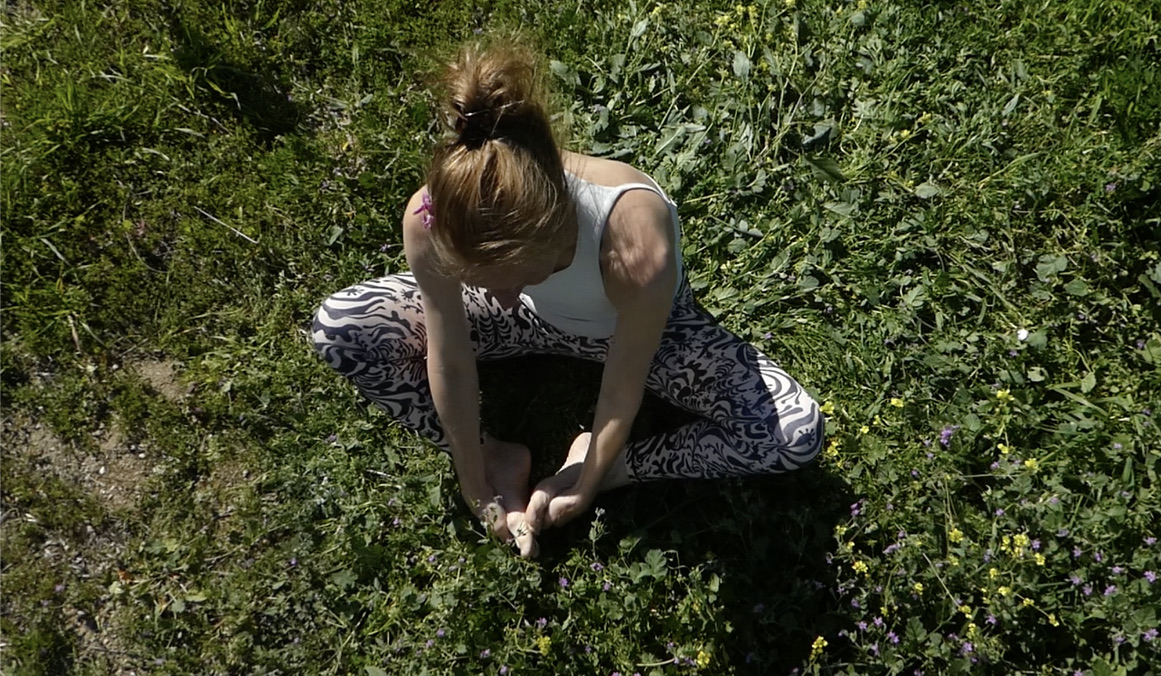
What Feldenkrais is about:
Feldenkrais is about changing how your nervous system organises movement, perception, and response through engaging with curiosity.
Through gentle, attentive movement, your system begins to:
- sense more clearly
- reduce unnecessary effort
- discover new possibilities
- reorganize itself in a more efficient, fluid way
This is where you begin to feel the shift—from bracing → sensing more clearly → responding.
A personal story
There was a time when I felt on edge in my body—anxious, unsure, constantly checking if I was “doing it right.” In social situations, I held back, adjusted, stayed small.
And over time, I began to feel this in my body too: fatigue, tension, disconnection, and habits that felt hard to change.
Then I encountered the Feldenkrais Method.
Somewhere in me, something resonated, as if it remembered that ease and pleasure are natural expressions of the body.
I enrolled in the 4-year Feldenkrais teacher training in 2005.And what unfolded alongside the learning… was a whole new way of being.
As a dancer, my movement opened and softened. As a person, I settled into myself and began to feel at ease in my body again.
From a system that was constantly “on guard” to one that could open, connect, and respond again.
I discovered what it means to move with grace, curiosity, and presence and to feel at home in my body.
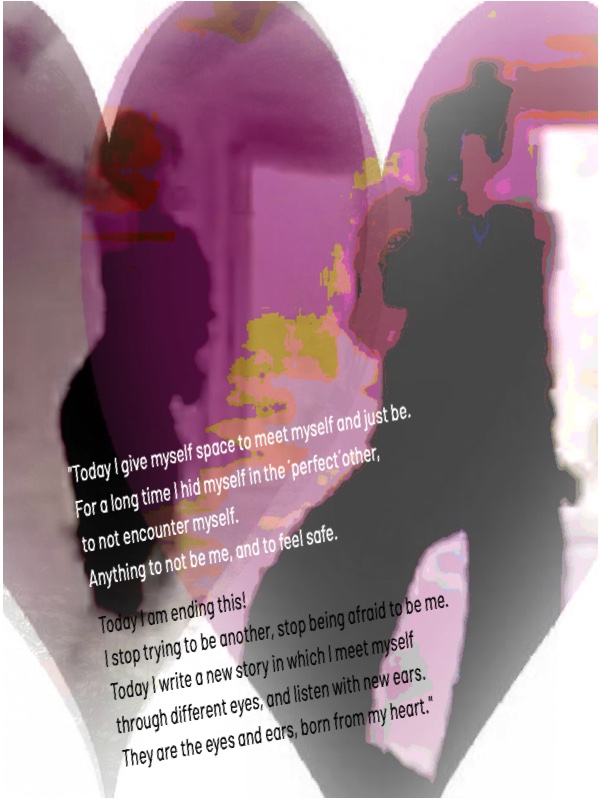
“I believe that knowing oneself is the most important thing a human being can do for himself. How can one know oneself? By learning to act not as one should, but as one does.” Moshe Feldenkrais
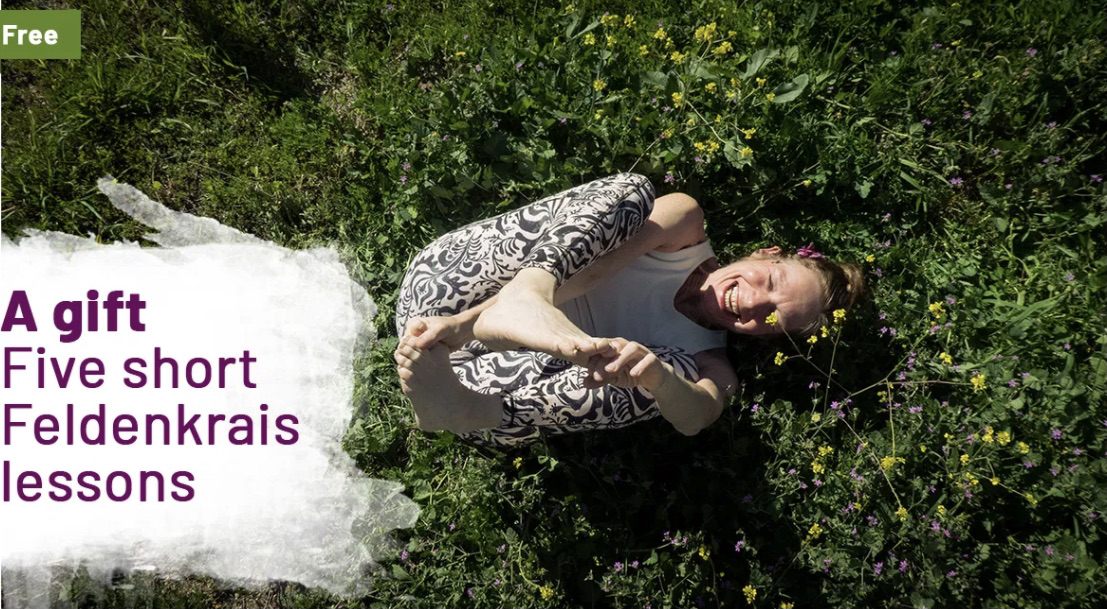
Unlearning what you were taught
Many of us move through life guided by invisible rules:
Sit up straight. Hold your core. Push through. No pain, no gain.
Enough is not enough, you have to be better than the rest.
Well-meant, yes, but many of these rules about how you should be – how to move, act, breathe, or relate to your body and others- can quietly pull you away from what actually feels good.
They can become the ground from which self-critical voices grow that whisper: Am I doing it right? Am I safe being who I am? Will I ever be good enough?
Following those rules can keep your body tense, alert, and scanning—locking you into stiffness, self-monitoring, and constant internal control.
Do these rules truly serve you, or do they pull you away from your playful Self Wise and your body’s intelligence, its messages, and the ease of expressing and moving freely through life?
A Feldenkrais session invites you to pause, to play, to explore, and to remember your natural intelligence—your Self Wise, and your sensuous body. These can guide you back to ease, flow, and pleasure.
A Feldenkrais session offers gentle, playful explorations—new experiences that re-awaken you to your biology’s intelligence and cues. Through curiosity, slow and aware movement, and attention to pleasure and ease, your nervous system begins to attend again to how it can move freely, respond gracefully, and connect to what actually feels good. From this place, it becomes easier to attune to your needs.
It is here, in this space of gentle experimentation, that judgment begins to shift towards discernment and compassion, and curiosity towards life and others begins to grow. From here, patterns of bracing, tension, and staying small can begin to soften and dissolve – opening new possibilities in how you relate and attune to yourself and others.
Your body, no longer constrained by old rules and constant self-monitoring, begins to reclaim its natural flow, ease, and flexibility.
What Becomes Possible
Through my Feldenkrais approach, your system can begin to:
- release chronic tension and unnecessary effort
- restore natural coordination and fluid movement
- improve energy, resilience, and recovery
- feel more present, responsive, and at ease
- reconnect with a sense of inner direction and trust
Not by pushing—but by allowing your system to learn in its own pace and way.
“I have had a few individual lessons from Pingel.
She did for me what I have not been able to achieve on my own before. I could feel safe for an hour, and be comfortable, be interested. Be and breathe, without a pulled-up harness. It was an entirely new experience, and I didn’t have to instruct myself to “let go”. My analytical head did not have to participate and it was a relief. Finally, for once, not trying my best and still getting results.”

Move from Your Body’s Wisdom
This is where you begin to move your body´s way and let your body rediscover how it can move again with curiosity, attention, and playful exploration.
Feldenkrais is at the foundation of the second and third pillars of MAMA: Anchor in your body and Move from your body’s wisdom. Through gentle, attentive movement, Feldenkrais helps you anchor into your body and reorganise how you experience yourself by shifting patterns of sensing, perception, and moving.
Through attentive, explorative movement, your body starts to reconnect: Your head, spine, pelvis, and feet find each other again, like a conversation slowly coming back online.
A Mini-Practice: Move your body´s way.
Pause where you are. Please come to standing in a way that feels natural.
As you look around, notice what draws your eye, what captures your attention.
How does your body respond? Your neck… your shoulders… your spine… your pelvis… Is there a sense of movement, even slight? And your eyes… are they leading or following your head?
Repeat a few small movements …Notice your breath. How does it move your chest and belly as you turn your head?
Slow down, go lightly, follow what feels pleasurable
Is there a shift of weight ever so slightly on your feet?
How are your neck, shoulders, back, and pelvis following the turning of your head now?
Move with curiosity and attention to what your body wants… No right or wrong, only discovery.
Maybe you noticed:
- a freer turn of your head
- a softer stance
- a breath that deepens on its own
- Small shifts in how you organise.
When your body moves in its own way, all its parts begin to work together, moving with ease, fluidity, and efficiency. The system can then freely orient itself – relax, trust, and respond, rather than react.
This is how MAMA guides you back to flow.
When you witness without judgement, how you move, behave and imagine yourself to be in the world, you can initiate change. Change can happen by learning to become aware through enjoyable movements that may bring to light personal details about yourself you never knew. – Moshe Feldenkrais
What to expect
Each session gently engages your nervous system in learning—through movement, sensation, and attention.
You are guided through slow, mindful explorations:
- often lying down, sometimes sitting or standing
- moving in ways that feel easy, pleasant, and non-forcing
- with attention on sensation, not performance
Sometimes with eyes closed, so your system can sense more deeply and organize itself from within. Through movement, imagery, and awareness, you begin to notice how your body, brain, and perception work together—and how they can work with more ease.
In a way, it becomes a quiet dialogue… between you and your body.
The background of the Feldenkrais Method
The Feldenkrais Method was developed by Moshe Feldenkrais—engineer, physicist, and martial artist.
After a serious knee injury, he became deeply curious about how movement works and how the nervous system organizes it. Through exploration, he taught himself to walk again—laying the foundation for a method rooted in awareness, movement, and learning.
It brings together insights from biomechanics, neuroscience, and human development, and is offered in two forms:
Awareness Through Movement (guided explorations) and Functional Integration (1:1 sessions).
Rather than correcting you, it invites your system to notice, explore, and reorganize. So new, more efficient ways of moving and being can emerge.