
To change our mode of action, we must change the image of ourselves that we carry within us. — Moshe Feldenkrais
In my twenties, I worked part-time as an attendant in the municipal museum in The Hague.
My job was simple: keep an eye on the paintings.
There was a hall dedicated to the work of Piet Mondrian. Painting after painting, the whole wall filled with his geometric world — and then, in the middle of it all, a large canvas called Evolution.
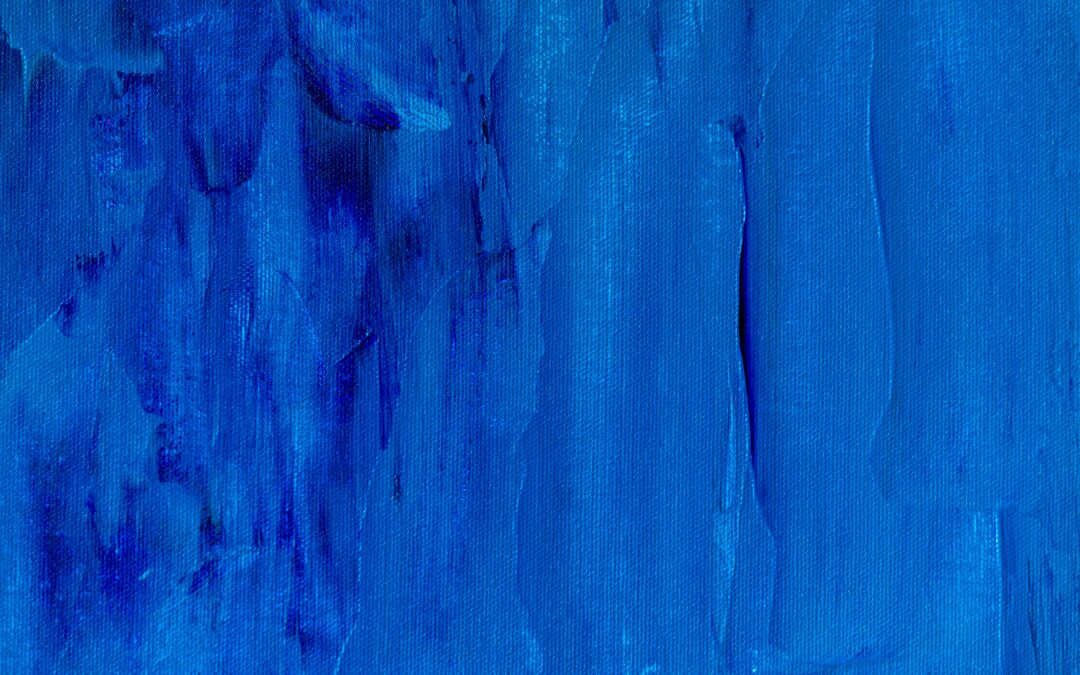
Blue. The most extraordinary blue. Blue in the blue, layer upon layer, that draw me to other places...
I stood in front of it and forgot everything — time, space, my body, the other paintings I was supposed to keep an eye on.
Moments like that made me wonder how attention shapes our lives. What happens when one experience grabs our attention so completely that, for a while, everything else fades into the background?
As we live life, we have many experiences that hurt us, scare us, give us joy, love,… And as we grow, they become the stories of our lives, the paintings in our inner museum.
All of it is there, on the walls of the museum we carry inside us.
And in every museum, there is always one painting that captures the attention more than the others.
Mine was a classroom in the Netherlands: a little girl with buck teeth, spiky hair and a fiery red blush on her cheeks. The teacher making fun of her, the other children jeering at her.
And the girl — I can still see and feel her so clearly, standing in the front of the class — looking at herself from the sidelines as she cringes and slowly disappears.
For a long time, that was the only painting I could see.
I stood very close to it. So close that it filled my entire field of vision. Every thought, every movement, every glance in the mirror passed through the lens of that image — of a girl who was wrong in some fundamental way, who didn’t belong.
Over time, as my attention kept returning to this inner painting, I felt more anxious, more tense, and more alone.
The body learns quickly. Mine learned to hold itself in a way that matched the painting: braced, contracted, and on guard.
When we stand very close to one painting for long enough, it can begin to feel as though it is the only one in the museum.
A nervous system organised around a particular storyline keeps returning to the same painting, searching for threat and confirmation of what it already knows. Little by little, the whole system begins to organise around that story, until we experience our inner museum as if that painting were the whole museum.
We may feel it in the way our body braces, our jaws clench, our shoulders tense, or our breath becomes more shallow.
When attention has been drawn to one difficult painting for a long time, it can be surprisingly nourishing to discover another one that has been hanging there all along.
My body encountered experiences it had no reason to defend against. Little by little, my attention was no longer drawn to just one story. I gradually began to perceive my whole inner museum.
The difficult painting is still there. From where I now stand, it is simply one painting among many.
From this new place, something shifted in the way I experienced myself, and with it, the way I held myself and moved through the world.