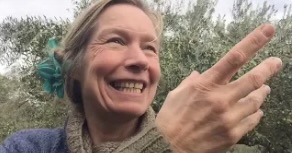

Renew your self-image to match who you really are?

Renew your self-image to match who you really are?

Very early on, our brains create an image of ourselves that has its roots in our earliest life experiences. Our brain uses this self-image as a kind of roadmap to predict who we should be and how we should be in relationship to our environment, and others. This self-image directs how we move, talk, think, feel, and perceive ourselves in the world. It drives our behavior and relationships, and it shapes our model of the world.

As toddlers, we learned by trial and error what was safe to feel and express in order to receive love from our caregivers. We learned to suppress certain sensations and copy certain behaviors for fear of rejection. In other words, we learn early on who, how, and what we need to be to belong and be safe.

A self-image is a complex composition of image, movement, emotion, sensation, and perception. Depending on how it sees us in the world, it forms attentional habits that then act as a filter, a kind of glasses, distorting all our perceptions, images, emotions, thoughts, and sensations. And all those perceptions, emotions, thoughts, and sensations inform our neuro-biology about what the world inside and around us is like.

So you could say that our self-image colors our inner experience and our perception of the outside world. If this keeps repeating itself, it creates patterns in our neurobiology that in turn affect our lives, relationships, and well-being.

Suppose you have a negative self-image...This can become an endlessly repeating circle that culminates in hypervigilant attention habits that revolve around what is wrong and constantly reinforce our negative experiences. Resulting in our neuro-biology running survival programs that deplete our body systems of energy. We might not feel very well in our skin all-together which in turn reinforces our negative self-image. An endless circle…

How can you create a new self-image that matches who you really are in the heart of your being?

Our body tells our story. It's like a history book. The way she stands, sits, moves, dances, and expresses inner movement. They are all expressions of how we are in the world and how we are in relationship with ourselves, and others. They also reveal how our nervous system has organized itself based on our self-image.

Our body also knows the way out of a negative self-image. That is out of neurobiological survival patterns rooted in negative attention habits. If we only dare to trust her and entrust us to her guidance, she will show us how to write a new story. A new story through the physical senses and how she receives the environment through them.

When we put our minds in the passenger seat and enjoy the ride of the eyes, ears, nose, tongue, and skin, we experience the world as it is. A world that is not necessarily about us. It's neutral and it helps our brains map themselves into the here and now that isn't colored by the attentional habits of our self-image. It gives our brain an accurate world map of the moment.

Our brain has the task of mapping out a route to the next moment that is as energy-saving, enjoyable, and pleasant as possible. This means that the brain makes a prediction and a strategy to face the future, the next moment. Our biology and body systems then use this information to do their magic. You can imagine that the uncolored objective reality of our senses provides a better roadmap for that route than the colored subjective negative world map created by the self-image.

And in time with the real-time roadmap of the senses and the updated strategies of our brain, our genius system starts to form a new self-image that is rooted in the here-and-now story of how we belong and are embedded in the greater web of life.

And then the circle starts again. Attention habits form that inform our biology which in turn informs us through how we move, feel, sense, give meaning, dream, and envision. Only this time the attention habits tell us about what is, and reflect our nature back to us by what we receive from the present world around us. And those will be messages of beauty, goodness, kindness, and ease that recalibrate our inner compass to our inner sparkle, to genuine well-being, and authenticity

And to have again an inner compass that guides us to our inner sparkle, to our north star, to the essence of who we are... That is what I wish for us all.

Natural impulses to heal

Natural impulses to heal

Let´s have a look at our brain´s agenda

In the former blog I wrote about the importance of a sustainable energy budget for healthy emotional, mental, and physical being.

Maintaining a sustainable energy budget is one of our brain's priorities. It is constantly adapting to the environment in the most economical way to keep the system in a dynamic balance (homeostasis) with minimal impact on the energy budget.
By natural design, it does so by mapping itself into the here-and-now environment through the senses. Then the brain asks the somatic communication channels emotion, sensation, image, and meaning about ´how the information that the senses bring in feels. Our brains then can get to the task of predicting how best to adapt to the environment based on the maps that it has created. That is, maintain a dynamic balance in the system without using precious energy when it is not needed.

But what if our past gets in the way?

Painful past experiences, and associated attention habits, movement- and postural patterns, limiting beliefs, negative self-image, and intense feeling states such as excessive worrying, anxiety, sadness, anger, or shame disrupt the spontaneous in-the-moment flow of information through the somatic channels of sensation, emotion, meaning, and image.

Rather than commenting on the input of the senses those channels then send signals related to these painful inner experiences to the brain. As a result,  your system stays stuck in a self-repeating cycle of rapidly building intensity, over-arousal, and collapsing that demands more energy from the energy faculties in your system than is available.  Instead of the brain making accurate predictions based on its maps of the present moment, the predictions come from intense inner experiences that push the system over and over again into high energy-cost survival strategies such as fight, flight, and freeze.

As you can imagine, this erodes your energy capacity which then leads to even more stress, overwhelm, anxiety, and exhaustion, risking serious long-term chronic health issues.  So it is important to break this cycle to allow the brain to get back to doing what it is meant to do so that your system can function optimally and you can dance through your life in healthier, resilient, and joyful ways.

Addictive patterns in attention

Yet over time, many of us have quietly become addicted to attention habits rooted in the idea that something is wrong and that life is supposed to feel like a struggle. Outdated ideas like “You have to feel worse first to feel better” or “No pain, no gain” still underlie most forms of therapy, coaching, and movement education. Many of us have been taught that we must attend to our painful experiences to heal, or push our bodies and minds to grow.
But rather than leading to healing and growth, these ways reinforce the hypervigilant, painful trauma patterns that underlie our attention to what feels wrong or bad, and our belief that we must be hard on ourselves or struggle to feel the way we want to feel.

The first step to breaking the cycle of stress, overwhelm, anxiety, and exhaustion is to follow the natural impulse of your system. 

Our wise system teaches us that living and feeling in the present moment is a much more rewarding, healing, and economical way to recover from our trauma and regain vitality, joy, and resilience. It restores our energy budget, giving our brain the energy and capacity to process life better.

When you learn to eliminate this parasitic attraction to inner disturbing, very intense signals, your movements, thoughts, feelings, and life choices become more coherent. You then no longer fight against yourself, and the living system that you are. Rather you begin to collaborate with your system's self-healing impulses and potential. You will find that this gives you the energy, peace of mind, and space to create a meaningful, authentic life in a fluid and sustainable way. And you will start to feel better in your body, mind, and emotional faculties.

Unlike what you may have learned so far, you then don´t attend to the inside voices that tell you that something is wrong. Instead you let your senses freely roam in your immediate environment and receive what is here and now. And this sensory orientation to the present moment helps your brain make a renewed prediction of what might happen next. And that will most likely be much more neutral, and positive than letting your anxious inner experiences create a future that is reliving your past wounding.

The neural programs that result from this sensory orientation are attuned to what is needed for the system to effortlessly, and economically keep a dynamic balance while dancing with the constantly changing environment. It is a systemic form of energy efficiency and self regulation that sets you up for ease and growth and allows your body systems to function optimally. This creates the space to be creative, find solutions, enjoy inner peace, and live life with more lightness and equanimity.

I have two reflective questions for you:

  1. How often do you turn your attention to pleasurable sensations and thoughts as you move, talk, work, cook, think, feel, or do nothing?.
  2. How often do you see, hear, smell, taste, and feel the immediate world around you?

Do you long for greater ease, lightness and pleasure in your everyday life? Are you curious to learn more about restoring your internal energy resources and how you can help your nervous system better organise, and thrive?

Experience it for yourself in the 7 Day private retreat:´Neuro-somatic dance Journey from Freeze to Flow´

When there is not enough energy for what you need

When there is not enough energy for what you need

What does your internal energy consumption look like?

There is a lot going on about energy efficiency and how to minimise high energy bills. We all have households with many energy-consuming appliances like smartphones, refrigerators, washing machines, lighting, and computers. We subscribe to an energy supplier for X amount of energy. Often, we don't have to think about this because we only see the effects of our usage reflected in our bill. But every now and then we may face a shortage of power. The capacity has been reached and the power system says Nope. The demand for energy exceeds the amount of energy that can be supplied at that time.

Often it is quickly resolved by turning off a device. But what if we constantly run out of energy for the appliances we need to keep us warm, give us light, keep our food fresh? If a power outage lasted a long time, it would be disastrous for the food we keep in our fridge, for example.
We all have things that need to be permanently on like a fridge, things that only need electricity when we use them like lights and there are things we put on standby in case we need them like the television or an electric toothbrush. They may use a little energy instead of full power but they still take from the power net.

If our power grid capacity is exceeded, we need to look at what is really needed and where we can cut back by turning off appliances or using them at other times of the day. So outside, so inside!

What about the cost of your internal energy usage?

As living beings, we also consume internal energy generated by the energy supplier of our system. And it pretty much works the same as in our outside world. There are body systems that run in the background and need energy 24/7 to keep us alive: like our respiratory system, nervous system and brain, heart, immune system, digestive system, part of our motor system, and so on. There are body parts' that we use consciously and often, such as our muscles that need energy to generate power to move, hold us upright, hold us together, speak, look around, hear, smell, eat, and express our emotional states. Like our mind that needs energy to think, and so on. And all these physical energy processes have to stay within a certain range for us to be on the safe end of survival.

One thing is certain, we cannot buy more capacity for our internal energy system. Each of us has a certain capacity available. So our system has to manage its capacity well to keep everything within a safe bandwidth. If we exceed that bandwidth, we risk an energy outage. And as you can imagine, that can be disastrous. Fortunately, our system then has a preservation system that kicks in as a measure of first aid. It is called the Freeze response and it preserves our energy currency 'Oxygen' by turning off all systems that do not pose an immediate threat to our survival when they are more or less de-activated, so that our heart and brain can continue to do their work. But the freezing system is not a solution for long-term excessive use because it uses precious energy blocking all body systems that cost energy and it does so without generating energy.

Ideally, our system should not need to resort to a freeze response on a daily basis. And ideally, we should not use large amounts of energy every day to fight or flee. Or do we? For many of us, the reality is that we live in a fast-paced, mind-oriented society with little regard for our nervous system and biological needs, resulting in chronic stress, mental pressure, and overwhelm. A day to day world where there is less and less time to nurture our soul, to rest, or for a warm-hearted, meaningful moment together, a refreshing walk in nature, or a dance, simply because it is so much fun to let loose for a bit.

How energy efficient is your system?

That said, imagine if an energy consultant came to your “home” to check your internal energy meter and look at the efficiency and sustainability of your internal energy consumption patterns? How high would your consumption be? Maybe just look at your movement habits, your attention habits and your emotional and thinking habits...

Are you working harder than you need to?
Are you constantly overthinking or worrying?
Do you experience a lot of intense emotions on a daily basis?
Do you experience a lot of stress in your day-to-day life?
Does the world feel like a dangerous place?
Do you rush through your days?
Do you spend hours sitting and looking at your screen?
Do you often tighten your shoulders and clench your jaw to hold yourself together? 
Or do you tighten your muscles to keep yourself upright?
Do you squeeze your buttocks and abdominal muscles together when you speak out? Or perhaps to look a certain way?
Do you metaphorically walk on eggshells and hold your breath to avoid conflict with others?
Do you try to push your physical limits when you exercise or do yoga? 
Do you often have muscle pain after working out?
Are you hard on yourself? Maybe a perfectionist?

Some of these questions may be easy to answer. Some may be about unconscious stress- and tension habits. Nevertheless, all of these habits and patterns in perceiving, moving, acting, thinking, and feeling lead to the depletion of your system's energy budget. This can eventually make you feel stuck, flat, disconnected, fatigued, overwhelmed, and anxious in your daily life.

In the next blog, I'll reflect a bit more on how our brain takes care of our internal energy budget and the ways it can become disorganised in the process.

Every door that closes opens another door

Every door that closes opens another door

Closing some doors so that other doors can open. Ending a chapter writing a new one...

Closing 2024 for 2025 to open. Saying goodbye to habits, stories, and beliefs that don't serve anymore and welcoming other parts of ourselves.

The last two years have been challenging, yet inspiring years for me. I have met parts of myself that I have learned to embrace with initial resistance, I have met parts of myself that rock and fill me with pride...  I have done things I never thought I would have the courage to do, pushed my limits, and set some firm boundaries.

I have lost friends and found new ones. I have said goodbye to stubborn beliefs and welcomed new insights. I discovered the power of wonderment as I explored uncharted areas of my heart.

I start this year with a heart that slowly dares to open to what was once frightening.

A delicate dance between inward and outward, old and new, closed and open, tight and loose.

Which chapters will you close? Which doors will you open?

What uncharted areas of your heart are waiting to be explored?

Let us take root in the here-and-now of our sentient, sensuous bodies and soar courageously and free with the winds of 2025. May we boldly invite the unknown that unfolds behind the door that opens and receive its surprise with curiosity and wonder.